
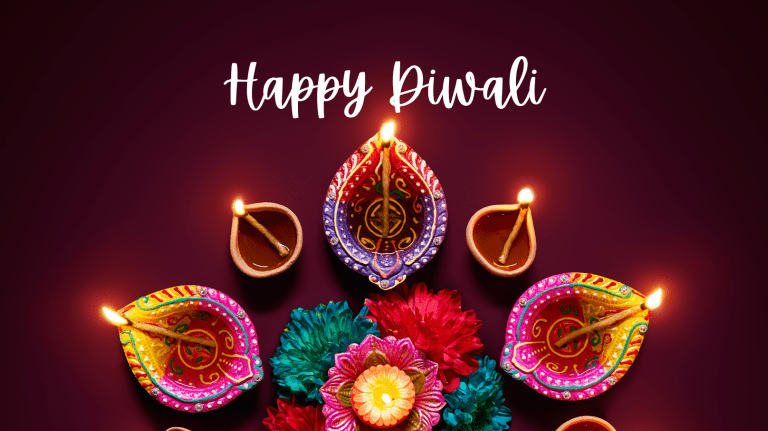
As another Diwali (or Tihar as we Nepali call it) approaches – Laxmi Puja is on Sunday – I find myself enveloped in a blanket of nostalgia, my thoughts meandering through the lanes of my hometown in Nepal. The festival of lights, as joyous and radiant as it is, also casts a shadow of longing in my heart in the quiet of my Canadian home.
In Nepal, Diwali was not just a day; it was a crescendo of excitement and joy building up over weeks. The preparations began at least a week in advance. Our house would transform into a bustling hub of activity. I remember the rhythmic sounds of brooms, mops and dusters as we engaged in the annual cleaning ritual (my mom made sure that every nooks and corners of the house were spic and span), making our home ready to welcome the goddess Lakshmi.
Decoration was a family affair. We would gather around, each contributing to adorning our abode with colourful rangolis, a living room adorned with crepe papers, and flickering diyas (I am talking about pre-electrical decorations days). The evenings were especially magical. As the sun dipped below the horizon, our home would come alive with myriad lights, casting a warm glow on everyone’s faces.
The air was always thick with the aroma of festive cooking. My mother, a wizard in the kitchen, would prepare an array of sweets. The fragrance of kheer (rice pudding), khurma, gujiya, and, my favourite besan laddu were the true heralds of the festivities.
But the heart of Diwali, for me, was the laughter and camaraderie that filled our home. Relatives and friends gathered, the night resonating with the sound of music, singing, a constant stream of deusi/bhailo (and the planning that we made with our deusi/bhailo group to visit the neighbourhood to collect blessings and money and later the excitement of distributing the collection), and the shuffling of cards – a ritual that we observed to welcome Lakshmi. There was a palpable sense of togetherness, a communal joy that seemed to light up not just our home but our hearts.
Contrast this with my Diwali in Canada. The festival here is quiet, almost a whisper of the grand celebration back home. No relatives are knocking at the door, no air thick with the aroma of sweets, and no symphony of laughter and card games. The streets don’t glow with lights; the night is just a regular night, darker maybe, silent definitely.
The difference is stark and sometimes overwhelming. The loneliness of being away from the fervour of home festivities haunts me. The bright lights of Diwali in Nepal seem like a distant dream, a stark contrast to the dimly lit evenings here. What I wouldn’t give to be transported back, even if just for a day, to relive those moments of pure, unadulterated joy.
Yet, as I light a solitary diya in our small home, I realize these memories are a bridge that spans continents and oceans, connecting me to my roots and culture. The essence of Diwali, after all, is about the victory of light over darkness. By cherishing these memories and creating new ones, I keep the spirit of the festival alive.
Diwali, therefore, becomes more than just a festival; it’s a reminder of my journey, of my dual identity straddling two worlds. It’s a testament to the fact that no matter where we are, our traditions and memories can light up the darkest of nights.
As I sit here, miles away from home, I wonder how many of you have similar stories to share. How do you keep your traditions alive in lands far away from where they originated? Let’s light up this digital space with tales of our Diwalis, lights, nostalgia, and the warmth of home that we carry in our hearts, no matter where we are.

