
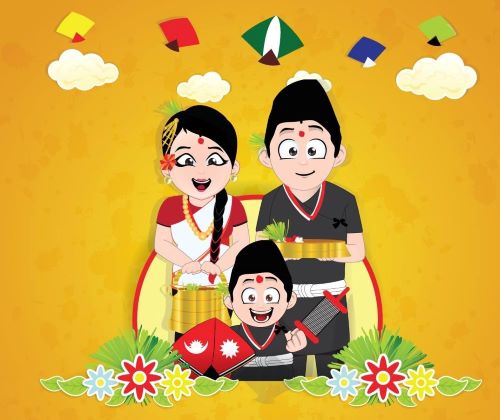
HAPPY DASHAIN!
Dashain, for many, conjures images of families reuniting, laughter echoing from rooftops and waging the neighbourhood-friendly war with kites, and the joy of togetherness. Hindus all over the country celebrate Nepal’s biggest and longest festival, which stands for the triumph of good over evil. At its heart, it’s about reconnection, reunion, and revitalizing familial bonds.
But what happens when casteism and segregation obfuscate the very essence of Dashain? What does it mean to celebrate a festival of unity when one’s own society ostracizes certain (family) members because of their caste?
The Silent Shadow of Casteism
Despite the progress we’ve made in various aspects of our lives, casteism persists as a grim shadow over Nepal’s cultural and social landscape. For those unfamiliar, the caste system is a hierarchical division of society into ranks based on descent and occupation. Historically, it has been a tool for systemic discrimination, where certain castes were marginalized, oppressed, and deprived of rights and opportunities.
This discrimination is felt even more acutely during festivals like Dashain. While many families come together, those who are victims of caste-based discrimination often find themselves isolated, even within their communities. The very celebration that’s meant to unite becomes a stark reminder of the divisions that persist.
The Void of Segregation
Many young Nepalis, myself included, grew up listening to stories of Dashain’s importance. The tales of Goddess Durga’s triumph over the demon Mahishasura or the story of Lord Ram’s victory over Ravan are not just tales of gods and demons; they are symbolic narratives of good prevailing over evil.
However, when communities perpetuate caste-based discrimination, they’re acting contrary to the very essence of these tales. The segregation and marginalization that occur due to casteism are a poignant contradiction to the values that Dashain represents.
Why I Don’t Celebrate Dashain
For many like me, Dashain has become a bittersweet memory. The knowledge of the injustice and discrimination that persist in our communities frequently dampens the anticipation of happy reunions. I have been on the sidelines of the celebration because I married into a different caste. How can one genuinely celebrate victory over evil when there’s a tangible evil, like casteism, that thrives?
Until the day every Nepali can celebrate Dashain without the looming spectre of casteism, the festival remains a hollow celebration for me. The spirit of Dashain is unity, and as long as caste-based discrimination exists, that spirit is broken.
The Hope for Change
But all is not lost. My children have demonstrated that the younger generation is more vocal, more aware, and more determined to bring about change. Through education, activism, awareness, and community engagement, we can challenge and change deep-rooted biases.
As we look forward to a future Dashain, I hope to see a Nepal where everyone, irrespective of their caste, can celebrate the festival with genuine joy and unity. Only then will Dashain truly resonate with its core essence: the victory of good over evil.
Disclaimer
This post is not meant to dismiss Dashain’s significance or reduce it to a mere commentary on societal ills. Instead, it’s an invitation for introspection and change. As we don our festive attire and prepare for the celebrations, let’s also make a commitment to building a more inclusive and equitable society. Only then will our celebrations be complete.
 Thinking Out Loud