
As I sat down one Sunday evening, a cup of chamomile tea in one hand, and while browsing through YouTube (the addiction I am afflicted with), I stumbled upon a video from Pick Up Limes, which is one of my favourite channels, titled “Life is Short (How to Spend it Wisely)“. My curiosity was piqued, and I decided to give it a watch. Little did I know, it would be the catalyst for a cascade of thoughts about my own life.
The video entailed a journey about growing older and how our relationships and priorities evolve with time. Given my recent retirement musings, it felt like the universe had conspired to show me this video. A particular point of contemplation was whether I would prefer to spend my time in solitude or with a partner and how my choice would impact my future.
Thoughts of my relationships with my loved ones started to race through my head. It dawned on me that it was time to bring out the ‘planning hat’ and chart my course for the future — whatever remaining life I have. I decided to curate a bucket list (that is, for a separate blog where I would plan my life strategically)—a collection of dreams, ambitions, and goals I wished to achieve. I also resolved to fortify my bonds with my family and friends.
Our World in Data published an article on Who do we spend time with across our lifetime? The above chart is interesting. Let’s delve into some data to understand how people spend their time. This information is based on time-use surveys primarily in the US, but the trends are universal. Imagine this scenario: during our youth, our focus tends to center around our friends, siblings, and parents. Nevertheless, as we grow older, we tend to prioritize our significant other and children, particularly during the busy decades of our 30s, 40s, and 50s.
Interestingly, after age 60, when many of us step into the golden years of retirement, time spent with colleagues and coworkers notably dwindles. The graph shows a fairly consistent interaction with about 40 people throughout our lives, but the dynamics of these interactions change.
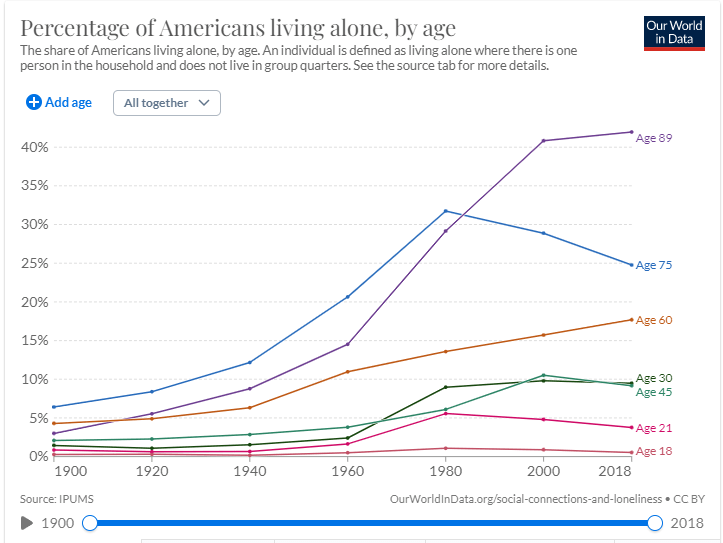
A striking revelation is that individuals over 40 spend more time in solitude than their younger counterparts. This could result from various elements, perhaps an upsurge in responsibilities or a subtle shift of priorities towards personal and family life. And I am writing this based on my personal experience, having noticed that I value my alone time more (one of my friends remarked that he gets social anxiety at social gatherings) as I’ve gotten older and prioritize it over social activities. However, it’s important to note that spending time alone can also positively affect mental health and self-reflection.
On the other hand, people in their vibrant 20s and 30s seem to enjoy a larger social circle. This could be attributed to more avenues for networking thanks to their workplace, hobbies, and shared interests.
In the end, I’d like to say that life is a beautiful journey of evolving relationships and shifting priorities. I’ve been thinking a lot about retirement and the future lately, and it’s made me appreciate the present more and the joy of appreciating the relationships I have with people right now. After all, we are the artists of our lives, aren’t we? Let’s paint a beautiful picture together.
 Thinking Out Loud
One thought on “Living Alone?”